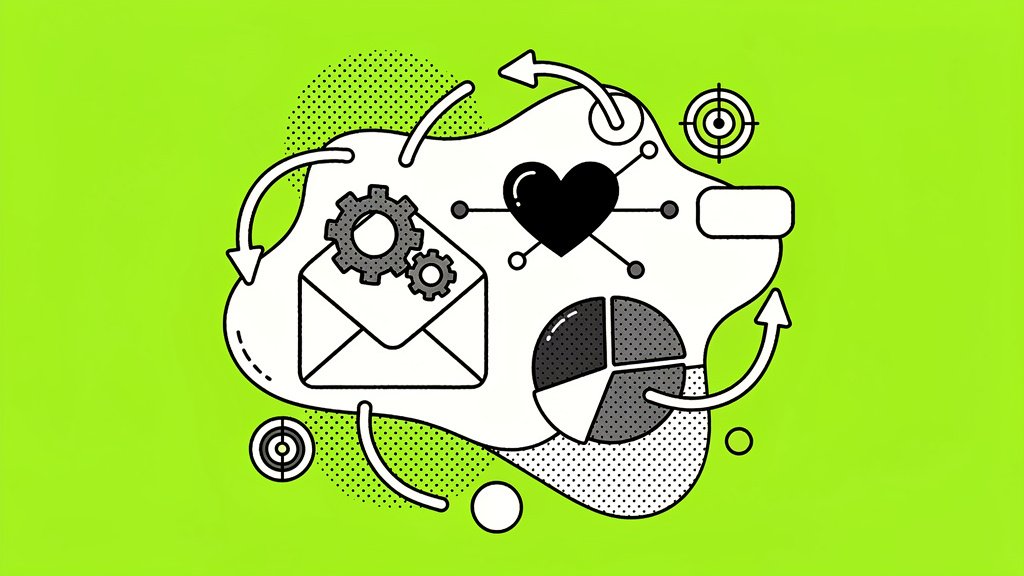
Nonprofit email marketing sits at this fascinating intersection of relationship-building and strategy, where the right message sent to the right person at the right time can genuinely change what your organization is capable of. But here’s the thing: most teams are leaving a lot of that potential on the table, not because they’re not trying, but because they’re working with the wrong setup.
In this post, we’re going to dig into how segmentation and automation work together to make your email campaigns feel less like broadcasts and more like conversations. You’ll walk away with practical frameworks, a few workflows worth stealing, and an AI prompt you can use today to sketch out your next 90-day plan.
Why Segmentation and Automation Matter Right Now
A lot of nonprofits are sending email. Not all of them are sending good email. Generic blasts to your full list might feel efficient, but they quietly erode trust, tank deliverability, and train your donors to ignore you. Segmentation fixes this by dividing your list based on donor history, engagement level, or geography. Automation makes those segments work for you around the clock by triggering timely messages based on real behavior, not just calendar dates.
The numbers tell an encouraging story. Nonprofits average 28.59% open rates and 3.29% click-through rates (stripo.email), both well above what most commercial senders see. But personalization takes things further, with tailored emails boosting open rates by 26% and conversions by as much as 202% (stripo.email). That gap, between sending emails and sending the right emails, is exactly what we’re here to close.
Protip: before building any automation, audit your current performance. If your open rates are already above 28% but your click-through rate is dragging below 2%, your problem is relevance, not reach. Segmentation is your fix.
Donor Segmentation Fundamentals: Start With What You Already Have
You don’t need a data science team for this. Start with what’s already sitting in your CRM: donation history, engagement levels, recency, and basic demographics. The goal is turning that raw data into actionable groups you can actually write to differently.
Here are five foundational segments every nonprofit should build, along with the email approach each one calls for:
- New donors need a welcome series that highlights immediate impact. Their first 48 hours post-gift are the highest-engagement window you’ll ever get with them.
- Lapsed donors (inactive 6+ months) respond to re-engagement stories that reconnect them emotionally to your mission.
- Monthly sustainers deserve exclusive updates that reinforce the ongoing difference their recurring gifts make.
- High-value and major donors expect personalized, insider-level communications, not the same newsletter everyone else gets.
- Volunteers and event attendees convert when you bridge their time investment to a financial ask with a clear, compelling narrative.
Platforms like Funraise make this especially practical. Its real-time dynamic lists auto-update as donor behaviors change, so you’re never manually exporting CSVs or worrying about stale segments. And if you haven’t tried it, there’s a free tier with no commitment, which makes it easy to test segmentation without any budget risk.
Automation Workflows That Actually Convert
Automation turns one-time donors into long-term advocates by delivering the right message at the right moment. The trick is mapping triggers to specific donor actions rather than just scheduling sends around the calendar.
| Workflow Type | Trigger Event | Primary Goal | Why It Works |
|---|---|---|---|
| Welcome Series | First-ever donation | Retention and second gift | Personalized welcome emails see +14% CTR lift (causevox.com) |
| Lapsed Donor Win-Back | No gift in 90 days | Reactivation | Story-driven re-engagement can drive up to 116% donation increase |
| Recurring Card Expiry | Payment method expiring | Sustain revenue | Timely nudge prevents involuntary churn |
| Peer-to-Peer Milestone | Fundraiser hits 50% of goal | Momentum and social proof | Triggers network effect among supporter circles |
Funraise’s automation engine pulls live CRM data, keeping segments like “recent $1,000+ givers” accurate without manual upkeep. That native integration between segmentation and triggered sends is what separates a real all-in-one fundraising platform from a disconnected stack of tools.
Protip: don’t try to automate everything at once. Start with two workflows: a welcome series and a lapsed donor sequence. Run them for 60 days, optimize, then expand.
What We See Go Wrong (Before Teams Get This Right)
We work with nonprofit teams regularly, and the same patterns come up again and again before organizations get their email strategy sorted. A few of the most common:
- the “batch and blast” habit: a development director sends the same year-end appeal to 40,000 contacts, including someone who donated last week and someone who hasn’t opened an email in two years. Result: rising unsubscribes and declining deliverability,
- disconnected tools creating data gaps: a fundraising manager exports donor data from one CRM, imports it into a separate email platform, and by the time the campaign sends, the segment is already outdated. A recurring donor who upgraded yesterday still gets the “please give” message,
- automation without segmentation: a nonprofit sets up a welcome email but sends the identical message to a $25 first-time giver and a $5,000 major donor. Both feel completely unseen.
These aren’t edge cases. They’re the daily reality for teams juggling multiple platforms without integrated infrastructure. An all-in-one solution like Funraise eliminates most of these friction points by keeping donor data, segmentation logic, and email automation inside one system.
Try This Prompt: Build Your Segmented Campaign Plan in Minutes
Copy the prompt below and paste it into whichever AI tool you use daily (ChatGPT, Gemini, Claude, Perplexity, whatever’s open in your browser right now):
I run email campaigns for a nonprofit focused on [MISSION AREA, e.g., youth education]. Our donor list has approximately [LIST SIZE] contacts. Our biggest conversion challenge right now is [PRIMARY CHALLENGE, e.g., reactivating lapsed donors]. We currently use [CURRENT TOOLS, e.g., Mailchimp + separate CRM]. Build me a 90-day segmented email automation plan that includes: (1) three priority donor segments with criteria, (2) a triggered workflow for each segment with send timing, (3) subject line A/B test ideas for each workflow, and (4) specific recommendations for how an all-in-one fundraising platform like Funraise.org could simplify execution by unifying donor data, segmentation, and automated sends in one place.And while you’re at it, consider leaning on solutions like Funraise that have AI built directly into the workspace where you’re already executing tasks. Full operational context, no tool-switching, no copy-pasting data between tabs.
Storytelling Inside Segmented Automations
Stories convert when they’re matched to the right segment. Lapsed donors respond to redemption arcs (“Since you last gave, here’s what changed”). New donors engage with quick wins (“Your first gift already did this”). Major donors want scope and vision. These aren’t the same email, and they shouldn’t be.
Use merge tags and donation history to make narratives specific. Something like “Your last gift fed 5 families in Phoenix. Double it today?” lands very differently than a generic impact paragraph. Visuals boost CTR by 65% (avidai.com), so pairing impact photos with geo-specific storytelling, wherever your data supports it, is well worth the extra effort.
Keep formatting tight: two or three short paragraphs, one bold donate button, zero clutter. 48% of donors say they prefer email updates over any other channel (stripo.email), so make each send worthy of that trust.
“The nonprofits that win at email are not the ones sending the most messages. They are the ones whose systems know enough about each donor to send the right message, at the right time, without a human having to press send every time.”
Funraise CEO Justin Wheeler
Measuring What Matters (and Ignoring What Doesn’t)
Optimize for conversions, not vanity metrics. With Apple’s Mail Privacy Protection inflating open rates across the board, clicks and revenue per email are your real north star. Funraise’s email performance dashboards track delivered, opened, clicked, and actual revenue attributed to each campaign, connecting the full funnel rather than leaving you guessing.
For segmented sends, reasonable benchmarks to aim for are open rates between 28% and 53%, CTR around 2.9%, and conversion rates between 2% and 5% (salesso.com). If you’re below those floors, your segments are probably too broad.
Three optimization moves worth making this quarter:
- A/B test subject lines pitting urgency against personalization. In our experience, personalized lines consistently win by meaningful margins,
- clean your list quarterly by removing contacts with zero opens in six months. Smaller, engaged lists outperform bloated, disengaged ones every single time,
- scale your winners: when a workflow outperforms, replicate its logic across similar segments before you build something new.
Protip: use heatmap-style calendar views (available in Funraise’s reporting) to spot engagement patterns by day and time. Double down on high-response windows instead of guessing.
Future-Proofing Your Email Strategy
Privacy changes and inbox competition are only increasing. With nonprofits now sending an average of 62 emails per subscriber per year (nptechforgood.com), automation isn’t really optional anymore. It’s the only way to maintain quality at that volume without burning out your team.
Committing to weekly sends, monthly performance audits, and quarterly list hygiene creates a sustainable rhythm. Cross-channel integration matters too: texting inactive email subscribers can deliver 2x response rates when sequenced after an unanswered email.
The nonprofits seeing 73% average online donation growth year-over-year on Funraise (funraise.org/growth-statistics) aren’t doing anything magical. They’re combining segmentation with automation inside a unified platform and then iterating relentlessly on what works. So start simple: a free Funraise account, your first two segments, one automation workflow. Measure it. Then build from there.
About the Author

Top Bloomerang Alternatives for Data-Driven Direct Marketing Teams
Can you name the channel that produced last month's gift? Bloomerang alternatives compared on attribution, segmentation, and testing infrastructure.
Nonprofit Fundraising Strategy: Building Data-Driven Campaigns That Compound
Fundraising has always been about relationships. But somewhere between the thank-you letters and the year-end appeals, a lot of nonprofits end up stuck in a loop: chase donors, spend big on acquisition, watch them disappear, repeat. Sound familiar? There's a better way to think about it, and it starts with treating your donor base less…
Best Nonprofit CRMs to Run Data-Driven Direct Marketing Campaigns in 2026
Nonprofit marketing has never been more data-rich, and yet so many organizations still feel like they're flying blind. You've got donor records, giving histories, email open rates, and campaign data scattered across spreadsheets, email tools, and maybe a CRM that's technically doing its job but not quite pulling its weight. Sound familiar? So let's fix…