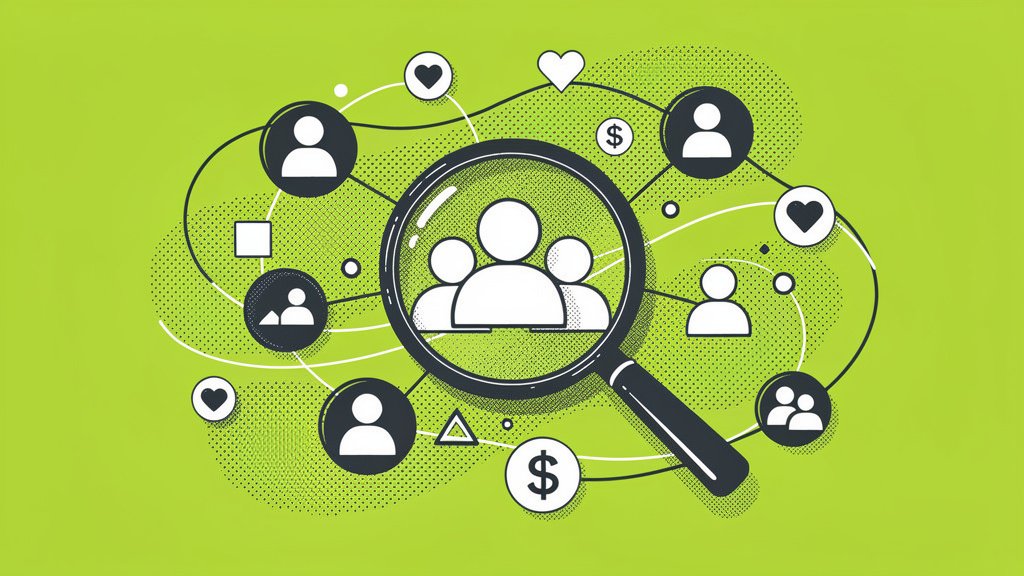
Nonprofits that consistently land transformational gifts aren’t necessarily the biggest or the best-known. In many cases, they’ve just gotten really good at one thing: knowing who to ask, when to ask, and why that person might say yes. That discipline has a name, and it’s called prospect research. It’s not the flashiest part of fundraising, but it’s quietly one of the most powerful.
So let’s dig into what prospect research actually means in practice, how to do it ethically (because yes, there are real guardrails here), and a practical, step-by-step approach to finding major donors who might already be hiding in your existing database.
What Prospect Research Really Means
At its core, prospect research is the systematic process of gathering, analyzing, and interpreting data on potential donors across three dimensions:
- Capacity: can they give? Think real estate holdings, SEC filings, business ownership, and stock transactions,
- Affinity: do they care? Look for board memberships, volunteer history, or donations to organizations with a similar mission,
- Propensity: do they actually give at all? Examine overall charitable and political giving patterns.
Together, these three factors form the CAP scoring model, which is the backbone of modern donor prospecting. The goal isn’t to compile dossiers on people. It’s to transform raw data into actionable profiles so your team spends time cultivating the right relationships instead of chasing cold leads.
A major gift threshold varies by organization, but most U.S. nonprofits define it as $10,000 or more annually. And given that total dollars raised from individuals grew 2.9% in the first half of 2025, driven by larger gifts despite a 1.9% drop in donor numbers (Funding for Good), targeted research has never been more critical.
Protip: Don’t limit prospect research to new names. Your richest pipeline is probably already sitting inside your existing database, among mid-level donors who’ve been giving quietly for years.
The Ethics of Donor Research
Prospect research touches sensitive territory. You’re examining people’s financial lives, giving habits, and personal affiliations, and getting this wrong doesn’t just create legal risk. It erodes trust in ways that are really hard to repair.
The Association of Professional Researchers for Advancement (APRA) sets the gold standard for ethical guidelines in the U.S. Their principles boil down to three core commitments:
| Ethical Principle | What It Means in Practice |
|---|---|
| Transparency | Be prepared to explain what data you collect and how you use it if a prospect asks. |
| Accuracy | Cross-verify information across multiple public sources. Never act on a single unconfirmed data point. |
| Respect | Stick to professionally relevant, publicly available information. Scrolling through a prospect’s personal social media photos crosses the line. |
So what counts as “publicly available”? Property records, SEC filings, published donor lists, business registrations, and news articles are all fair game. Purchasing data from shady brokers, misrepresenting your identity to gather information, or accessing private accounts? Clear violations, full stop.
Protip: Consider drafting a brief internal policy document that outlines your research sources, data storage practices, and retention timelines. It takes an afternoon to write and can protect your organization during audits or donor inquiries.
Why Prospect Research Matters Right Now
Here’s an uncomfortable reality: donor retention fell to 18.1% in Q1 2025 (Funding for Good), and 87% of foundations reported increased grant demand during the same period (Funding for Good). That’s pushing nonprofits to rely more heavily on private major donors, which means you can’t afford to spread your cultivation efforts evenly across every name in your CRM.
Prospect research lets you identify what we’d call “hidden gems”: donors with high financial capacity but low current engagement. And the barrier to doing this well has dropped dramatically. Machine learning tools now predict major donors with 92.2% accuracy (NonprofitPRO), which means you don’t need a research team of five. You need the right tool and a clear process.
Challenges We See Every Day
Before organizations switch to platforms like Funraise, or even in their first months on the platform, we consistently see the same patterns come up.
- The spreadsheet graveyard. Development directors maintaining prospect lists in Excel files that haven’t been updated in 18 months, with no wealth data attached and no scoring methodology in sight.
- The “gut feeling” pipeline. Major gift officers choosing who to cultivate based on personal hunches rather than data, and inadvertently missing high-capacity donors who don’t fit their mental picture of what a “major donor” looks like.
- Fear of seeming invasive. Board members or staff who resist any form of donor research because it “feels creepy,” even when they’re only looking at public records. The result? Significant revenue left on the table.
These aren’t edge cases. In our experience, they’re the norm at organizations that haven’t yet built a research-informed culture. And honestly, that’s not a criticism. It’s just where a lot of teams are.
Try this prompt in your favorite AI tool (ChatGPT, Gemini, Claude, Perplexity):
I'm a fundraiser at a nonprofit focused on [CAUSE AREA]. I have a list of [NUMBER] mid-level donors giving between $[CURRENT GIFT RANGE]. Using the CAP scoring model (Capacity, Affinity, Propensity), help me create a prioritized research checklist of public data sources I should review for each donor to identify major gift candidates, and suggest 3 personalized cultivation touchpoints for high-scoring prospects.
That said, while AI prompts are great for brainstorming, platforms like Funraise have AI components built directly into the workflow, giving you full operational context without copy-pasting data between tools.
Step-by-Step: How to Identify Major Donors
Step 1: Clean and consolidate your database. Duplicate records and missing contact fields will sabotage every screening you run. Funraise is a solid starting point here, offering an all-in-one nonprofit fundraising platform with integrated donor management and a free tier to get you going.
Step 2: Run wealth screening. Scan for real estate ownership, known giving history, business affiliations, and stock holdings. Funraise integrates Kindsight/iWave screening at $0.99 per successful match, giving you Prospect Scores (1-4), Capacity estimates ($500K+ ranges), and Planned Giving Scores.
Step 3: Score and segment. Rank prospects using CAP criteria. Filter for what Funraise labels “Distinguished Philanthropists”: supporters with both high RFM (Recency, Frequency, Monetary) scores and high Prospect Scores.
Step 4: Cultivate with intention. Design personalized engagement paths for your top prospects. This might be an intimate event, a facility tour, or a one-on-one meeting with your executive director. Whatever fits the relationship.
One underrated move: Don’t overlook political giving data and peer-to-peer fundraiser performance. Someone who raised $1,220 through a P2P campaign (the average on Funraise per NonprofitPRO) is demonstrating both network influence and mission affinity, two major donor indicators most teams ignore entirely.
Protip: Rescan your top 50 prospects every 6 to 9 months. Life circumstances change fast. A business sale, an inheritance, or a new board appointment can dramatically shift someone’s capacity and propensity overnight.
Tools That Make It Work
| Tool | Standout Features | Best For |
|---|---|---|
| Funraise | Integrated Prospect Score, Capacity ranges, Planned Giving Score, RFM scoring, Kindsight/iWave integration | All-in-one CRM with prospecting built in |
| DonorSearch | Deep philanthropic and wealth marker profiles | Organizations needing standalone research depth |
| Kindsight/iWave | Affinity scoring by NTEE code | Matching prospects to specific cause areas |
Funraise customers grow online revenue 73% year-over-year on average, which is 3x the industry benchmark (Funraise Growth Statistics). A big part of that is because prospecting insights live in the same platform where donations are processed. No exports, no data silos, no toggling between tabs wondering which version of a spreadsheet is current.
“The best fundraising doesn’t start with an ask. It starts with understanding who your donors truly are and meeting them where their passion and capacity intersect.”
Funraise CEO Justin Wheeler
Building a Sustainable Research Strategy
Prospect research isn’t a one-time project you check off a list. It’s a recurring discipline that compounds over time, and the organizations that treat it that way are the ones that see the most consistent major gift growth. Here’s how to make it stick:
- screen annual fund donors annually for upgrade potential,
- track event and P2P participants as entry points into your major gift pipeline,
- leverage AI-driven prediction models to surface prospects your team would never have flagged manually,
- segment your database into actionable tiers, especially “Hidden Gems” (high Prospect Score, low RFM), and design targeted stewardship sequences for each group.
With 36% of nonprofits projected to end 2025 with budget deficits (Nonprofit Finance Fund), the organizations that invest in research-driven fundraising won’t just survive. They’ll be the ones positioned to actually grow. And if you haven’t started yet, Funraise’s free tier gives you a no-commitment way to explore integrated donor prospecting alongside your existing operations. The data is already in your database. You just need to look.
About the Author


Best Event Fundraising and Ticketing Software for Nonprofits: A Data-Driven Funnel Comparison
Your event is a five-stage funnel. We compared nonprofit ticketing platforms on what you can measure and test at each stage, plus seven tests worth running.
Top Bloomerang Alternatives for Data-Driven Direct Marketing Teams
Can you name the channel that produced last month's gift? Bloomerang alternatives compared on attribution, segmentation, and testing infrastructure.

Nonprofit Fundraising Strategy: Building Data-Driven Campaigns That Compound
Fundraising has always been about relationships. But somewhere between the thank-you letters and the year-end appeals, a lot of nonprofits end up stuck in a loop: chase donors, spend big on acquisition, watch them disappear, repeat. Sound familiar? There's a better way to think about it, and it starts with treating your donor base less…