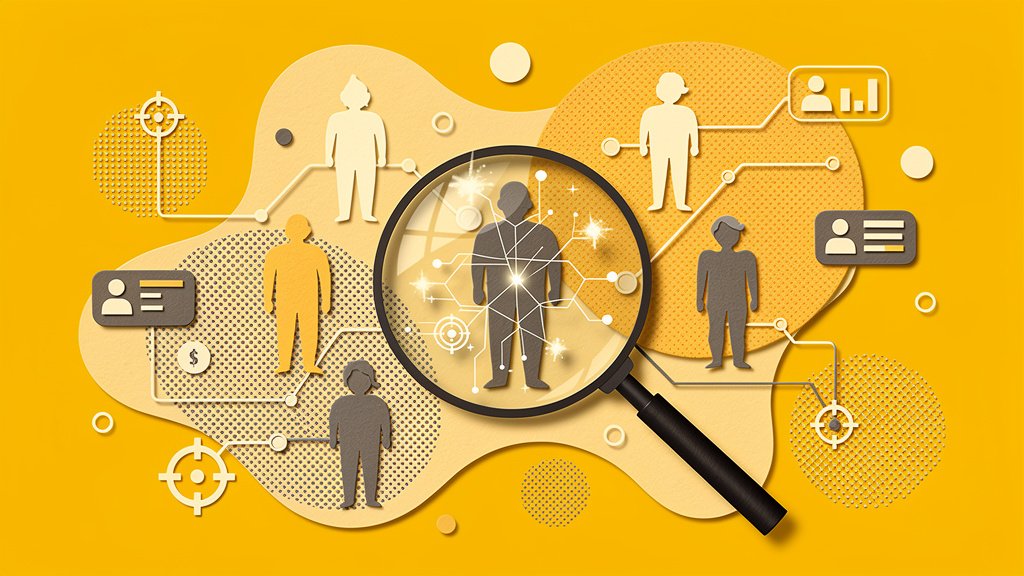
If you’ve ever sent a fundraising campaign and wondered why it didn’t land the way you hoped, there’s a good chance the answer lives in your donor data. Specifically, in what’s missing from it. Demographic appending has been around for a while, but AI is quietly transforming what it can actually do, and the gap between nonprofits using it well and those still working from incomplete records is growing fast.
In this article, we’ll walk through how AI improves the accuracy of demographic appending, what that means for your targeting strategy, and how organizations like yours are using enriched data to raise more money and serve their missions better. Plus, we’ll leave you with a ready-to-use AI prompt you can try today.
What Is Demographic Appending (and Why Accuracy Matters)?
Demographic appending is the process of enriching incomplete donor records with attributes like age, income, education level, homeownership status, and household composition by cross-referencing them against large third-party databases. (npoinfo.com, doublethedonation.com)
Traditional append methods depend heavily on exact-match logic. If an address is slightly off or a name has a typo, the record goes unmatched. This results in match rates of only 60-70% depending on the quality of your input data, meaning nearly a third of your donor base could remain demographically invisible to your team. (nsightful.com) For nonprofits targeting specific communities, that’s not just an inconvenience. It’s a genuine strategic blind spot.
Protip: Before running any append process, standardize your addresses using CASS certification or NCOALink. This single step can lift your match rates by 10-15% before AI even enters the picture. (nsightful.com)
How AI Pushes Match Rates and Depth to a New Level
Here’s where things get interesting. Machine learning moves beyond exact matches entirely. Instead of requiring a perfect record, AI algorithms infer missing demographic details by recognizing patterns across multiple fragmented data sources, including CRM records, social signals, public databases, and behavioral data. (virtuous.org, dataro.io)
Here’s a direct comparison of what that shift looks like in practice:
| Aspect | Traditional Appends | AI-Powered Appends |
|---|---|---|
| Match Rate | 60-70% (nsightful.com) | 80%+ with inference (dataro.io) |
| Data Sources | Static databases | Dynamic: CRM, social, real-time |
| Processing Time | Days to weeks | Real-time or hours |
| Output Depth | Basic demographics | Behavioral scores, predictive profiles |
| Cost Efficiency | High per-record cost | Scales with automation; up to 23% revenue lift (dataro.io) |
Beyond match rates, AI-powered appending incorporates psychographic and behavioral layers, pushing predictive accuracy for program outcomes to 70-85%. (fireflygiving.com) That’s a substantial leap over what static demographic profiles can offer, and it changes what you can actually do with your data.
When Things Go Wrong: Real Challenges We See Every Day
Before organizations get their data strategy right, the same patterns tend to surface again and again. These aren’t edge cases. They’re the norm.
A mid-size nonprofit runs a major giving campaign with a beautifully designed appeal, only to discover afterward that a large portion of their list was retirees on fixed incomes. The messaging was tailored for high-income mid-career donors. The data was never appended, and the campaign underperformed significantly.
A development director proudly reports that their CRM has 40,000 contacts. After a first-time audit, it turns out over 30% have outdated addresses, duplicate records, or missing key fields, making segmentation nearly impossible without a cleanup first.
These situations are fixable, but only when organizations stop treating data hygiene as optional. The leap to AI-enhanced appending really does require a clean foundation to build on.
Smarter Mission Targeting: What AI-Enriched Data Actually Enables
Once your demographic data is accurate and layered, the targeting possibilities genuinely multiply. Here are four high-impact strategies nonprofits are deploying right now.
Dynamic Segmentation lets you group donors by predicted affinities, not just age brackets. Think identifying millennial donors through tech-forward behavioral patterns and serving them mobile-first campaigns. (funraise.org)
Predictive Prospect Scoring ranks which contacts are most likely to give at a mid or major gift level. Only 2.3% of nonprofits currently use predictive AI for this purpose (nptechforgood.com), which means early adopters have a meaningful head start.
Optimized Send Timing and Personalization driven by AI increases response rates to 14% compared to just 9% using traditional batch-and-blast methods. (dataro.io) That difference adds up fast across a campaign.
Population Trend Alignment ensures your mission stays relevant over time. With 23% of the U.S. population projected to be elderly by 2060 and multiracial communities growing steadily (funraise.org), AI-enriched demographics let you spot those shifts in your donor base before they catch you off guard.
Protip: Test AI-powered segmentation on 20% of your list first. Run an A/B comparison against your standard approach, measure response and revenue differences, then scale what works.
Ready to Put This Into Practice? Use This Prompt
Copy the prompt below and paste it directly into your preferred AI tool, whether that’s ChatGPT, Gemini, Claude, Perplexity, or whatever you’re already using day-to-day.
I run a nonprofit focused on [mission area, e.g., youth workforce development]. Our current donor database includes approximately [number] contacts. We want to use demographic append data, including age, income, education, and geography, to improve our fundraising targeting. Based on these characteristics and the fact that our average donor is [brief donor profile description], suggest 5 specific audience segments we should prioritize, what messaging angles would resonate with each, and what demographic signals we should look to append first to improve campaign personalization.Variables to customize: [mission area], [number of contacts], [brief donor profile description], and you can optionally add [current campaign goal] for even more tailored output.
Prompts like this are a genuinely useful starting point for strategic thinking. But in daily professional work, it pays to rely on platforms that have AI built directly into the workflow. Funraise integrates AI components right where your team already operates, inside your fundraising tools, giving you full operational context rather than working from assumptions. Start for free at funraise.org with no commitments required.
The Numbers Behind AI-Driven Demographic Strategy
The impact of precise demographic targeting shows up clearly in fundraising performance. Nonprofits using Funraise’s data-informed tools grew online revenue 73% year-over-year, three times the industry average, and recurring revenue by 52% year-over-year. (funraise.org) One organization achieved 128% recurring donation growth after implementing more precise demographic segmentation, and another saw a 583% surge in online giving by aligning donor acquisition with population trend data. (funraise.org)
“The nonprofits seeing the biggest gains aren’t necessarily spending more on outreach, they’re spending smarter, because they actually know who they’re talking to.”
Funraise CEO Justin Wheeler
The Adoption Gap, and Why It’s Your Opportunity
Here’s the thing: 92% of nonprofits report using AI in some form, yet only 7% say they’re seeing major impact. (nonprofitpro.com) The gap isn’t about access. It’s about implementation quality and data readiness.
68% of nonprofits currently use AI for donor analysis (amperagemarketing.com), but results plateau quickly when the underlying data is unclean or incomplete.
One emerging approach worth knowing about is Federated AI, a model where AI is trained across multiple nonprofit datasets without sharing raw records. This makes high-accuracy demographic predictions accessible to smaller organizations generating as few as 2,000 gifts per year, which levels the playing field considerably. (funraise.org)
Protip: Build AI literacy across your team. Currently 60% of nonprofit staff lack the expertise to fully leverage AI tools. (nptechforgood.com) Free resources, including Funraise University, are a practical starting point that costs nothing but time.
The Bottom Line
AI doesn’t just make demographic appending faster. It makes it fundamentally more accurate, more actionable, and more aligned with how your mission should be growing. Clean data combined with machine learning inference means you can stop guessing who your donors are and start actually knowing, and from there, build campaigns that genuinely resonate with real people.
If you haven’t yet explored what AI-enhanced demographic data could do for your targeting strategy, now is a pretty good time to start. Funraise offers a free tier with no commitment required, making it a low-risk way to see what data-driven fundraising actually looks like at your organization. Test it at funraise.org.
About the Author


Best Event Fundraising and Ticketing Software for Nonprofits: A Data-Driven Funnel Comparison
Your event is a five-stage funnel. We compared nonprofit ticketing platforms on what you can measure and test at each stage, plus seven tests worth running.
Top Bloomerang Alternatives for Data-Driven Direct Marketing Teams
Can you name the channel that produced last month's gift? Bloomerang alternatives compared on attribution, segmentation, and testing infrastructure.

Nonprofit Fundraising Strategy: Building Data-Driven Campaigns That Compound
Fundraising has always been about relationships. But somewhere between the thank-you letters and the year-end appeals, a lot of nonprofits end up stuck in a loop: chase donors, spend big on acquisition, watch them disappear, repeat. Sound familiar? There's a better way to think about it, and it starts with treating your donor base less…